

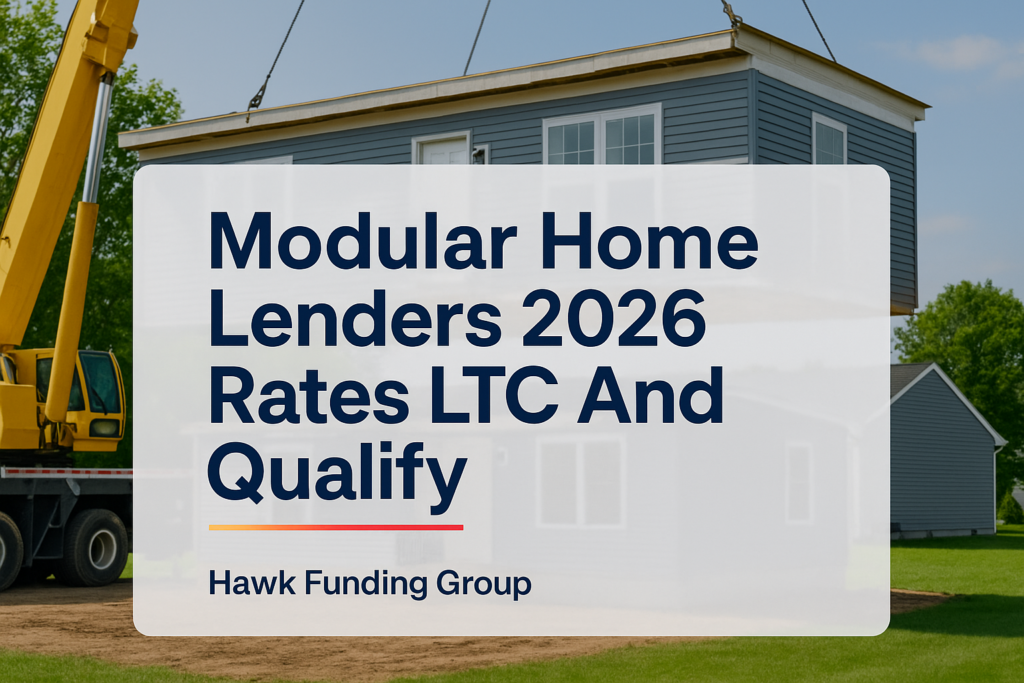
If you’re ready to finance a modular build, you’re likely grappling with how to structure your funding effectively. You want assurance that your project will progress smoothly, with timely access to capital as you hit key milestones. This article will guide you through the nuts and bolts of working with modular home lenders, covering everything from draw schedules to qualification criteria for financing.
Key Takeaways
- Progressive draw schedules from modular home lenders typically include 6 stages tied to construction milestones, ensuring funding is released precisely when you need it.
- Expect loan-to-cost (LTC) ratios to range from 70% to 90% based on project complexity and strong proposals, which can significantly impact your financing costs.
- Well-prepared documentation improves your chances of approval and allows you to budget effectively for unexpected costs.
- A common misconception is that modular financing is slow—Hawk Funding Group offers pre-qualification in minutes without needing tax returns or W-2s.
How Modular Home Lenders Structure Draw Schedules for Modular Builds
Progressive draw schedules are key when working with modular home lenders. They break down funding into stages tied to project milestones rather than releasing a lump sum. This structure helps manage risks and ensures everything is on track.
Understanding Draw Schedule Stages
Here’s how a typical draw schedule for modular builds may look:
- Land Acquisition: Your first draw helps secure the land before construction begins.
- Factory Deposit: Once you’re ready, the lender will release funds for the initial factory deposit.
- Module Fabrication: After the factory starts building your modules, another draw covers this phase.
- Delivery: Funds are released when the modules are delivered to the site.
- Set: Once the modules are set in place, you may have another draw.
- Weather-Tight Completion: This draw often occurs once the building is secured against the elements.
- Final Completion: The last draw happens when the project is fully completed.
Each stage typically requires inspection or proof of progress. This ensures that funds are used effectively and that the project stays within budget and timeline.
Why Staged Draws Matter
Staged draws are important for modular residential and multifamily projects for a few reasons:
- Risk Control: By inspecting before releasing funds, lenders minimize their risk.
- Quality Assurance: It verifies that materials and labor are meeting standards.
- Budget Management: Keeps cash flow aligned with actual needs, allowing for flexibility.
A well-structured draw schedule protects both you and your lender. It helps ensure that capital is available when you actually need it, keeping your project grounded.
If you’re considering a modular build, it’s worth reaching out to lenders experienced in this area. At Hawk Funding Group, we understand the unique challenges of these projects and can assist with tailored modular home loans. Let’s chat and get you pre-qualified in minutes.
What Rates, LTC, and Terms Should You Expect from Modular Home Financing?
Modular home lenders assess multiple factors when determining financing terms. It’s more than just the building type; deal strength, collateral, borrower experience, and exit plan all matter.
Key Financing Terms to Compare
When evaluating modular home lenders, here’s what you need to look at:
- Interest Rate: Rates vary widely based on lender criteria and your project. A strong proposal can lead to better rates.
- Loan-to-Cost (LTC): Generally, modular projects can see LTC ratios from 70% to 90%, depending on the lender and the project complexity.
- Amortization or Interest-Only: Some lenders offer interest-only periods initially; others may require full amortization from day one. Choose based on your cash flow needs.
- Term Length: Typical financing terms range from 12 to 36 months for modular builds and flips. However, longer terms might be available for stabilized properties.
- Draw-Related Fees: Understanding the Draw Schedule for Modular Builds is essential. Delayed draws can inflate your carrying costs.
The Impact of Project Strength
It’s crucial to note that the financing terms you receive depend heavily on the specifics of your project. The financeability of your modular residential and multifamily initiatives hinges on:
- The project’s complexity
- Your land position
- Completion timing
For example, lenders may offer lower LTC on more complex projects or those with uncertain timelines. If you’re planning a multifamily project, you might find more favorable terms compared to a single modular home because of the potential income from additional units.
Understanding Cash Flow and Carry Costs
These financing terms directly affect your monthly cash flow and the total cost of your project. A higher interest rate or lower LTC means you’ll need to bring more cash to closing. Additionally, if you’re facing delayed draws, your carrying costs can escalate quickly, squeezing your margins.
So what does this mean for you? Understanding these rates, LTC, and terms allows you to budget effectively and plan your exit strategy. At that point, it’s worth talking to a private lender who can move faster than a bank.
For more tailored advice, speak with a funding specialist at Hawk Funding Group. We can help you navigate your modular financing needs effectively.
How to Evaluate a Modular Build Deal Before You Request Funding
Before you reach out to modular home lenders, it’s essential to assess the quality of your modular build deal. A well-organized financing request not only boosts your chances of approval but also ensures that you have the right elements in place for a successful project.
Key Items to Review
Here are the core components you should pressure-test:
- Land Value: Determine the fair market value of the land you’re purchasing. An undervalued lot can cause issues later on.
- Total Project Cost: Itemize all costs involved, including construction, permits, and any unexpected expenses.
- Construction Timeline: Create a clear timeline that outlines project milestones. This helps all parties stay accountable.
- Factory/Vendor Contracts: Secure solid contracts with your manufacturers. These create a reliable payment structure and timeline.
- Zoning and Permits: Ensure all required permits are in place. Without proper zoning, your project risks delays.
- Exit Strategy: Have a clear plan for refinancing or resale once the build is complete.
- Contingency Reserves: Build in at least 10% to 15% for unforeseen factors that could disrupt your budget.
Common Pitfalls to Avoid
Investors often overlook critical costs like transportation fees, site preparation, and potential carry costs during delays. Here’s why these components matter:
- Transportation Costs: Modular units need to be transported to the site. Plan for this in your budget.
- Set Costs: Include any expenses related to setting the modules on-site. This often involves cranes and labor.
- Site Work Costs: Soil tests and foundation preparation can be time-consuming and expensive if not planned.
- Delay Carry Costs: If the project runs over schedule, you need to account for your holding costs, affecting cash flow.
Cleaning Up Your Submission
To present a clean, financeable modular deal, consider these strategies:
- Provide a comprehensive draw schedule for modular builds. Knowing when funds are needed is key to maintaining momentum.
- Include all the necessary documentation early, from vendor bids to land appraisals. It speeds up the review process with lenders.
- Present realistic timelines that account for potential delays and reserve funds accordingly. Lenders appreciate a well-prepared plan.
So, what does this mean for you? By focusing on the deal quality rather than just your borrower profile, you’ll improve your approval odds with modular home lenders and ensure a smoother financing process. If you’re ready to dive in, reach out to Hawk Funding Group for tailored options that fit your modular build needs. No tax returns. No W-2s. Just asset-based lending from 500+ lenders. Pre-qualify in minutes.
For more information, consider exploring our modular home loan options or get pre-qualified for funding today.
What Qualifies You for Modular Home Financing Without Tax Returns or W-2s?
If you’re looking to finance a modular build, understanding the qualification criteria used by modular home lenders is key. These lenders often focus more on the strength of your project and the value of your collateral rather than your personal income documentation. This approach gives real estate investors and developers the speed and flexibility they need for modular residential or multifamily builds.
What Makes a Strong File?
A solid financing file for modular home loans usually revolves around a few critical factors:
- Verified Assets: Clearly document your assets to showcase your financial stability.
- Down Payment or Liquidity: A substantial down payment indicates commitment. Liquidity in your accounts also signals financial security.
- Credible Budget: Your project budget needs to be realistic and detailed. This helps the lender assess the viability of the project.
- Acceptable Credit: Although tax returns and W-2s are not required, having acceptable credit is still essential for meeting lender criteria.
- Realistic Exit Strategy: Have a defined exit strategy in mind, whether it’s selling the property, refinancing, or leasing it out.
Understanding the Underwriting Process
No tax returns or W-2s doesn’t mean you’re off the hook for underwriting. Lenders are still evaluating the repayment risk based on your project and the assets you’re bringing to the table. They’ll want to see documentation for your assets and how you plan to manage and complete the project. This method allows asset-based lending to flourish while still addressing the risk associated with funding.
Why This Works for Investors
Investors who need quick approvals and flexible terms often find modular home financing appealing. In fact, many clients have successfully secured funding through this method. If you’re ready to explore options, don’t hesitate. Hawk Funding Group offers asset-based lending backed by 500+ lenders. Our process is designed to help you pre-qualify in minutes.
So, if you’re considering a modular home project, gather your documentation and make sure your file is strong. With the right support, you can move forward confidently and efficiently. For more information on our modular home loans or to speak with a funding specialist, give us a call at (737) 443-9313.
Why Investors Use Hawk Funding Group to Get Pre-Qualified in Minutes
Investors often turn to Hawk Funding Group for fast pre-qualification with modular home lenders. Our process is straightforward and designed for investors looking for speed and simplicity. With no need for tax returns or W-2s, you can get pre-qualified in minutes.
Instant Access to a Broad Lender Network
Hawk Funding Group connects you to over 500 lenders. This extensive network means you’ll find the best fit for your modular residential and multifamily projects. You won’t waste time searching endlessly through options on your own. Instead, you can feel confident knowing you’re matched to the right lender quickly.
Improved Deal Certainty and Speed
Quick pre-qualification helps you act decisively on modular deals. You strengthen your negotiations when you can show sellers you have funding lined up. In my experience, investors who pre-qualify faster mitigate the risk of losing a deal. The market moves quickly, and every minute counts.
How Pre-Qualification Benefits You
Here’s why getting pre-qualified with Hawk Funding Group is essential:
- Fast Turnaround: No waiting weeks for approval. Get pre-qualified in minutes.
- Simplified Process: No complex documentation needed like tax returns.
- Negotiation Power: Shows sellers you are serious and ready to act.
- Strategic Alignment: Get matched with lenders that fit your specific modular needs.
- Focus on Growth: Spend less time worrying about funding and more on your projects.
By pre-qualifying with Hawk Funding Group, you improve your chances of securing funding for your modular builds. Our asset-based approach allows you to focus on your projects without the hassle of traditional lending. So what does this mean for you? It means less uncertainty and more opportunity.
Ready to see how we can assist? Give us a call at (737) 443-9313 or contact us to explore your options. You’ll find it’s worth your time to start your pre-qualification process with modular home lenders today!
A Note From the Field
Isabella Osei in Chicago, IL had permits approved and a GC contracted for a ground-up duplex on a cleared lot but their regional bank froze the construction draw schedule mid-project citing appraisal concerns. Hawk Funding restructured the deal with modular home lenders – milestone-based draws tied to inspection sign-offs, 90% LTC, no income docs. Project back on track within 8 days. Delivered 6 weeks ahead of original timeline, $228K under budget.
“Every bank I approached didn’t understand factory-built construction. Hawk Funding got it immediately and structured draws around delivery timelines.” — Isabella O., Chicago
Hawk Funding Group funds real estate and business deals nationwide, including all 50 U.S. states with flexible underwriting and upfront terms. No tax returns. No W-2s. Just asset-based lending from 500+ lenders. Pre-qualify in minutes. Ready to talk through your deal? Call (737) 443-9313 and speak with a funding specialist today.
Frequently Asked Questions About Modular Home Lenders
How much does it cost to finance a modular home?
The cost to finance a modular home can vary widely, but expect rates between 4% to 10% based on risk factors like creditworthiness and project type. Hawk Funding Group can help you find competitive rates tailored to your specific situation.
What happens if I don’t qualify for modular home financing?
If you don’t qualify, it may be due to insufficient collateral or incomplete documentation. Consider improving your financial profile and preparing a stronger submission. Reach out to Hawk Funding Group for guidance on enhancing your application.
Can I qualify for modular home financing without tax returns?
Yes, you can qualify for modular home financing without tax returns. Lenders like Hawk Funding Group focus on project viability and your asset documentation rather than personal income verification.
How long does it take to get pre-qualified for funding?
Getting pre-qualified can take as little as 10 minutes with Hawk Funding Group. Our streamlined process eliminates the need for tax returns and extensive paperwork.
What are the requirements for modular home financing?
Requirements typically include verified assets, a solid down payment, and an acceptable credit profile. Specific terms may vary based on project complexity and lender criteria.
What documents do I need to provide for modular home financing?
Documentation often includes asset verification, a detailed project budget, and evidence of your land ownership. Start gathering these documents to enhance your chances of approval with modular home lenders.
Is there a minimum loan amount for modular home financing?
Minimum loan amounts typically start around $750,000 for modular home financing, applicable depending on the lender and project specifics.
How can I improve my chances of approval with modular home lenders?
To improve your chances of approval, ensure you have a detailed and credible project budget, verified assets, and a strong exit strategy. Consider working with experts like Hawk Funding Group for tailored advice.